
Dublin is a friendly and inviting city, known for its warmth and the famous "craic," a mix of banter, humour, wit and sharp thoughts that have drawn people for generations. Dublin has a charmingly worn feel making it the capital of Ireland. Over the years, Dublin has translated into the country's main port, a hub of finance, commerce and culture. It's a city of contrasts, bridging the gap between political echoes and the vibrancy of modern life. About one-fourth of Ireland's residents call Greater Dublin home and houses around 592,713 people. The whole of Dublin City and its surroundings house 1,263,219 residents. It is not just a city which is housing friendly but study in Dublin has garnered students from all over the world.
Dublin is the largest centre of education in Ireland, with four universities and several other higher education institutions. The city is home to Trinity College Dublin, Dublin City University (DCU), University College Dublin (UCD), Technological University Dublin (TU Dublin) are the top universities in Dublin. In addition to these universities, Dublin is also home to several colleges with long histories and international reputations, such as the Royal College of Surgeons. This Irish stronghold was also the European Capital of Science in 2012.
Why Study In Dublin?
Apart from the world-class education system, Ireland has been voted the safest country in the world to study in. Moreover, the capital, Dublin has an overflowing energy which is warm and welcoming to students. Find more reasons below:
English-Speaking Environment
Following Brexit, Ireland stands out as the sole English-speaking country in the Eurozone, Several Dublin universities provide foundation courses for those not completely comfortable with English. The city's English language schools are renowned globally for their exceptional facilities and uphold high education standards. They have made study abroad in Dublin most viable for international students struggling to learn the language.
Community At Large
Dublin's reputation as an excellent study-abroad destination is amplified by its friendly populace. Dubliners are known for their warm nature, often engaging with strangers in friendly conversations. The city is voted among the world's friendliest, with students frequently expressing how the hospitality and warmth of the locals enrich their time here. Additionally, Dublin's increasing multiculturalism (due to 32,000 international students living here) contributes to its reputation as a safe place to live.
Cultural and Historical Heritage
The streets of Dublin still hold a picture from its Viking origins to medieval fortifications, Gothic cathedrals, and Georgian townhouses. The city offers a range of experiences, including world-renowned museums, galleries and attractions. Visitors can explore masterpieces by Caravaggio, Velazquez and Vermeer at the National Gallery. Moreover, students can have a look at the eastern art treasures at the Chester Beatty, or peruse historical archives at the National Library.
Innovation and Creativity
Dublin's contributions extend beyond literature and music. Nobel laureates like Ernest Walton and William C. Campbell, both Trinity College Dublin graduates, reflect the city's impact on science. Dublin has gone digitally ahead, with groundbreaking research and innovation driven by a startup ecosystem, innovative accelerators, incubators and research centres. Courses in Dublin are hugely driven by such factors which the city stirs.
Top Universities And Global Ranking
View all >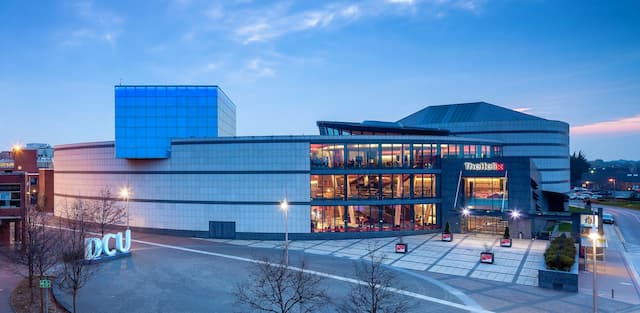

Dublin, Ireland
Cost Of Living
€ 27,948
 Tuition Fee
€ 9,173
 Country Rank
#410
€ 27,948
Tuition Fee from€ 9,173
Dublin City University (DCU) has established a reputation as the Ireland's University of Enterprise through its solid, ongoing relationships with academic, research, and business partners both domestically and abroad. DCU was founded as a university in 1989, and since then, it has expanded quickly in both size and performance. DCU takes great pleasure in providing excellence in all of its endeavours. It is a centre of academic excellence in teaching and research with a student body of nearly 11,500 and almost 2,000 non-Irish students from 116 different countries. The university was chosen as the 2010 Sunday Times University of the Year and is young and energetic. DCU, which is unconventional by nature, broke the mould and introduced fresh ideas to the Irish educational system.
Students must know that the Dublin City University acceptance rate stands at 63% making it one of the Ireland universities with the highest acceptance rate with high quality of education. There are more than 200 majors available at this university, which has five campuses and five primary faculties: engineering and computing, science and health, business, humanities and social sciences, and education. This university has earned the accreditation of prestigious bodies including the Association of MBAs and AACSB. According to the 2020 QS Graduate Employability Rankings, Dublin City University has the highest graduate employment rate in Ireland and is rated #1. DCU uses cutting-edge teaching and research approaches in order to encourage innovation and creativity and to clarify the path to discovery. Through its Graduates Attributes Program, the university aims to cultivate the leaders, businesspeople, and transformational thinkers of tomorrow. In Ireland, DCU was the first institution to integrate paid internships, or INTRA, into its degree programmes, providing students with a distinct advantage over Irish businesses. Students from DCU routinely rank among Ireland's graduates with the highest employment rates. Every student who attends classes at DCU is given individualised attention and every chance to advance their academic, career, and personal goals.
Dublin, Ireland
Cost Of Living
€ 27,948
Tuition Fee€ 12,850
Country Rank#74
€ 27,948
Tuition Fee from€ 12,850
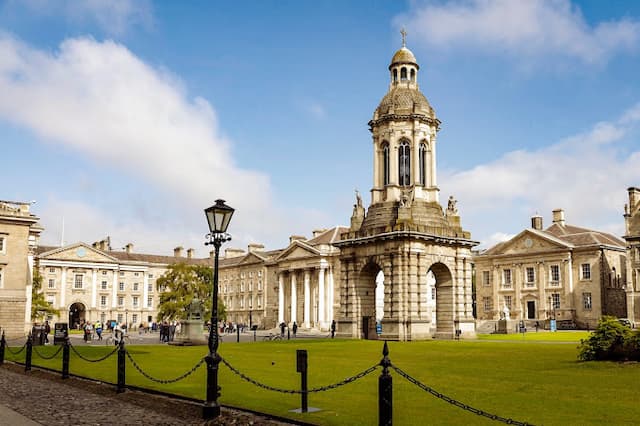
Trinity, which was established in 1592, is Ireland's top university. A community of academics at the forefront of research and instruction called Trinity's gorgeous campus, located in the heart of Ireland's thriving capital city. Trinity College Dublin provides a singular chance to combine a demanding academic programme with an unmatched variety of cultural, social, and professional activities. It combines historical traditions with internationally renowned centres of research expertise. Trinity students receive a top-notch education at a renowned university for both teaching and research thanks to its over 600-course options, a library with over 6 million volumes, and researchers who draw in €70 million annually in external funding.
In several fields, including nanotechnology, information technology, immunology, mathematics, engineering, psychology, politics, and English, Trinity is acknowledged as a top worldwide research centre and a global leader. Over 400 undergraduate courses and postgraduate teaching and research choices in the humanities, engineering, science, humanities, social sciences, and health sciences are offered by three faculties. Presidents and other world leaders, award-winning performers and filmmakers, internationally recognised poets and playwrights, entrepreneurs and business leaders are just a few of the alumni. Graduates also include recipients of Nobel Prizes in literature, science, and medicine. Trinity is dedicated to producing global citizens, whether they are Irish students making a difference abroad or students from more than 120 other nations engaging the local community with their cultural experiences. 17,000 undergraduate and graduate students attend it, representing all the major fields in the humanities and arts as well as business, law, engineering, science, and health sciences. Students must note that the Trinity College Dublin acceptance rate stands at 34% making it a very competitive university to get into.
Trinity is Ireland's top-ranked institution and is acknowledged internationally as Ireland's finest university. It is housed on a stunning campus in the centre of Dublin. The university is renowned for its vibrant social scene and for housing the oldest student organisation in the world. It has more than 120 societies and 48 sports clubs, but the societies that celebrate international holidays, share regional cuisine, discuss world politics, and promote cross-cultural exchange are the most active.
Dublin, Ireland
Cost Of Living
€ 27,948
Tuition Fee€ 10,250
Country Rank#114
€ 27,948
Tuition Fee from€ 10,250
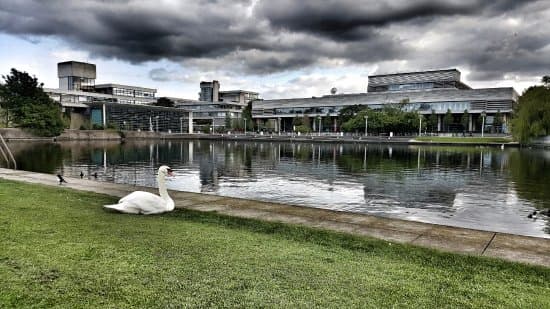
University College Dublin, one of Europe's premier research-intensive colleges is ranked among the top 1% of universities worldwide. UCD, known as Ireland's most international institution, with more than 30,000 students, 23% of them are foreigners. University College Dublin offers more than 400 UG and PG programmes to students from 144 different nationalities. In addition, UCD enjoys a unique reputation in India thanks to V.V. Giri, the fourth President of India and a graduate of the university. Programmes available at UCD are more reasonably priced in terms of tuition. Students must note that the University College Dublin acceptance rate stands at 20% which implies how challenging it is to be a part of this university.
The UCD O'Brien Centre for Science, UCD Sutherland School of Law, UCD Lochlan Quinn School of Business, UCD Moore Centre for Business, and UCD Student Center are just a few of the top facilities available at the university's main Dublin campus, which is located on a large parkland estate covering more than 130 hectares. The campus provides students with access to a vibrant, English-speaking capital city in Europe that is among the safest in the world and is known for both its friendliness and its vibrancy. As the largest university in Ireland, UCD accepts its responsibility in helping Ireland, Europe, and the rest of the globe prosper through its vast strength and diversity of subjects. It is a university of the future, built on the traditions of the past, constantly connected, actively involved, and dedicated to a sustainable future based on a healthy biosphere. The goals and key strategic initiatives put in place to carry out UCD's mission and vision for this era are outlined in the university's 2020–2024 Rising to the Future strategy.
International students at UCD will appreciate being in a nation with both contemporary cities and a long history and rich culture. Ireland is a great place to pursue undergraduate and graduate studies because it has one of the best educational systems in the world. Graduates from UCD are highly sought after by businesses, NGOs, and governments around the world. As one of the most open and globally linked nations in the world, Ireland presents access to global markets. Due to its geographical location and participation in the EU and Eurozone, it has quick access to global connections.
Dublin, Ireland
Cost Of Living
€ 27,948
Tuition Fee€ 4,850
€ 27,948
Tuition Fee from€ 4,850
Country Rank#7
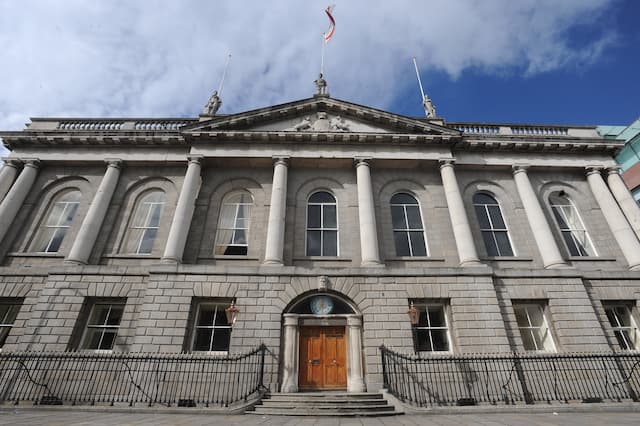
RCSI is an independent, not-for-profit university with a mission to ‘Educate, nurture and discover for the benefit of human health’. Established in 1784, RCSI was founded as the national provider of surgical training in Ireland. In the years since, RCSI has evolved to become one of the world’s leading health sciences universities.
Headquartered in Dublin, RCSI’s main campus has almost 3,500 enrolled undergraduate students from 79 different countries and more than 35,500 alumni from 108 countries around the globe. The University also has campuses in Bahrain, China and Malaysia.
RCSI Dublin offers undergraduate programmes in Advanced Therapeutics, Dentistry, Medicine, Pharmacy and Physiotherapy. Undergraduate students at RCSI benefit from early clinical exposure, international learning opportunities and RCSI’s strong links with healthcare systems. The University welcomes students from Ireland and around the world.
Undergraduate degrees are accredited by RCSI through a combination of internal quality assurance procedures and externally accredited by the National University of Ireland (NUI). Programmes are aligned with the National Framework of Qualifications (NFQ) and regulated by professional bodies in Ireland such as CORU, the Dental Council of Ireland (DCI), the Irish Medical Council (IMC) and the Pharmaceutical Society of Ireland (PSI).
Some of the undergraduate and postgraduate disciplines in which students can choose to study at RCSI include:
- Advanced Therapeutics
- Dentistry
- Medicine
- Health Professions Education
- Healthcare Leadership
- Healthcare Research
- Nursing and Midwifery
- Pharmacy
- Physician Associate Studies
- Physiotherapy
- Population Health
- Positive Psychology
What makes RCSI a great place to study?
Unique surgical heritage
RCSI was founded in 1784 as the professional body for surgical training in Ireland and has evolved since into a global leader in healthcare education and research.
Excellence in healthcare education
RCSI programmes are focused exclusively on the health sciences. RCSI curricula and approaches to teaching are innovative, learner-centred and future-focused.
State-of-the-art facilities
Home to Europe’s most advanced clinical simulation facility, RCSI’s city centre campus is also steeped in history and offers an exciting and immersive learning experience.
International community
RCSI’s student body is exceptionally diverse and inclusive, and comprised of more than 6,000 students from Ireland and 110 other countries across the world.
Vibrant student life
RCSI students enjoy a lively and stimulating social events calendar and are encouraged to get involved in any of our 50 student societies and 35 sports clubs.
Leading pioneering research
RCSI is at the forefront of pioneering healthcare research and innovation, addressing the key health and wellness challenges of our time and improving patient outcomes.
Admission Process & Requirements
The private and public universities in Dublin have more or less similar entry requirements. In some rare cases, students will be asked to give an interview as well. Let us understand all the application process below.
Documents Required:
- Academic transcripts.
- GPA required: 3.0 on a scale of 4.0
- English proficiency test scores. TOEFL-IBT: 83-100/IELTS: 6.0-6.5
- 2 Letters of recommendation
- Statement of Purpose/Essay (stating academic and professional goals)
- C.V. and portfolio.
- Resume or CV.
Admission Process
- Complete the application form
- Enroll in your Desired Course
- Gather necessary documents
- Settle application fees
- Review and submit
- Await university response
Scholarships In Dublin
This Irish beauty presents several financial options for students to choose from. Scholarships in Dublin are known to help students from the European Union and the rest of the world. These are some of the scholarship schemes they can apply for:
Government of Ireland – International Education Scholarships: These scholarships are funded by the Irish government and are available to international students pursuing undergraduate, postgraduate, or doctoral programs in Ireland.
- Amount: €10,000
NUI Galway International Student Scholarships: These scholarships are offered by the National University of Ireland and are available to non-EU students enrolled in undergraduate, postgraduate or doctoral programmes.
- Amount: €10,000
Trinity College Dublin Scholarships: Trinity College Dublin offers several scholarship opportunities for international students, including the Trinity College Dublin Scholarships and the Trinity Access Programme.
- Amount: €25,000
University College Dublin (UCD) Global Excellence Scholarships: These scholarships are available to international students pursuing undergraduate programmes at UCD. Those wanting to pursue masters in Dublin can also apply for this scholarship.
- Amount: 50% - 100% of your tuition fee.
Dublin City University International Merit Scholarships: These scholarships are offered by Dublin City University and are available to international students enrolled in undergraduate or postgraduate programmes.
Amount: €2000
FAQs
Dublin has outstanding educational prospects with its four universities: Trinity College Dublin, DCU, UCD and TU Dublin. Each of these universities is recognized in the QS World University Rankings.
Students in Dublin will spend on average €1,760 to €2,196 based on their lifestyle.
The average tuition fee in Dublin is €10,000 - €60,000.
Dublin's public transit includes electrified suburban trains, diesel commuter rail, trams and a bus system for the Greater Dublin Area's population.
Ranelagh, Rathmines and Drumcondra are some of the areas in which students reside in Dublin.